YakData

Founder and principal

Production judgment comes from carrying the whole system.

Stephen McDaniel leads YakData. His career has crossed product management, software development, data architecture, analytics, client delivery, development leadership, and production AI. That range matters when the expensive failure is rarely isolated to the model.

Stephen McDaniel, founder and principal of YakData
Stephen McDaniel · Founder and Principal, YakData

Selected operating background

  • Netflix
  • Tableau
  • SAS
  • Microsoft
  • Yahoo
  • Oracle
  • U.S. Navy Cyber
65%lower model cost at approximately 98% of top-model performance in a production AI optimization
~40people in the multidisciplinary SAS software organization Stephen led across engineering, UX, testing, documentation, and management
~$100Min product revenue responsibility during SAS R&D leadership work
30,000+working professionals trained in analytics, visualization, and data systems

Operator, not commentator

The background is broad because production systems are broad.

A consequential AI system crosses business value, data, architecture, software, evaluation, workflow, controls, economics, and operating ownership. YakData's advisory model is built around seeing those interactions rather than optimizing one component in isolation.

Product and R&D leadership

Deciding what deserves to be built.

Product leadership at Brio, SAS, Yahoo, and Tableau included new products, established product lines, customer requirements, prioritization, tradeoffs, and responsibility for products generating substantial annual revenue.

Enterprise analytics

Connecting analytical work to business consequence.

Analytics leadership at Netflix and later work at Microsoft reinforced the same operating discipline YakData uses now: begin with the decision, establish the evidence, and work backward into data, analytics, and implementation.

Systems and data architecture

Building what sits underneath the interface.

Work has included Oracle consulting, regulated pharmaceutical data systems, data-warehouse capability at Opsware, worldwide data-ingestion architecture for U.S. Navy Cyber, server-side systems, scalability, security, and production data platforms.

Development leadership

Keeping specialist work connected.

For five years Stephen led a roughly 40-person SAS software organization spanning engineering, management, UX, testing, and documentation. The job was not to replace specialists. It was to keep the product, architecture, implementation, release, and customer result coherent.


Production evidence

Acceptance standards beat model prestige.

In one production AI optimization, the system retained approximately 98% of the top model's measured performance while reducing model cost by 65%.

The decision was not “which model is smartest?” It was “what performance does the system actually require, what failures matter, and what economics survive production?” That is the level at which YakData works.

Define the acceptance standard.Make “good enough” explicit before optimizing.
Test alternatives against the system.Model output is only one part of operating performance.
Optimize for consequence.Cost, review burden, latency, failure exposure, and ownership all belong in the decision.
See the AI economics Field Note →
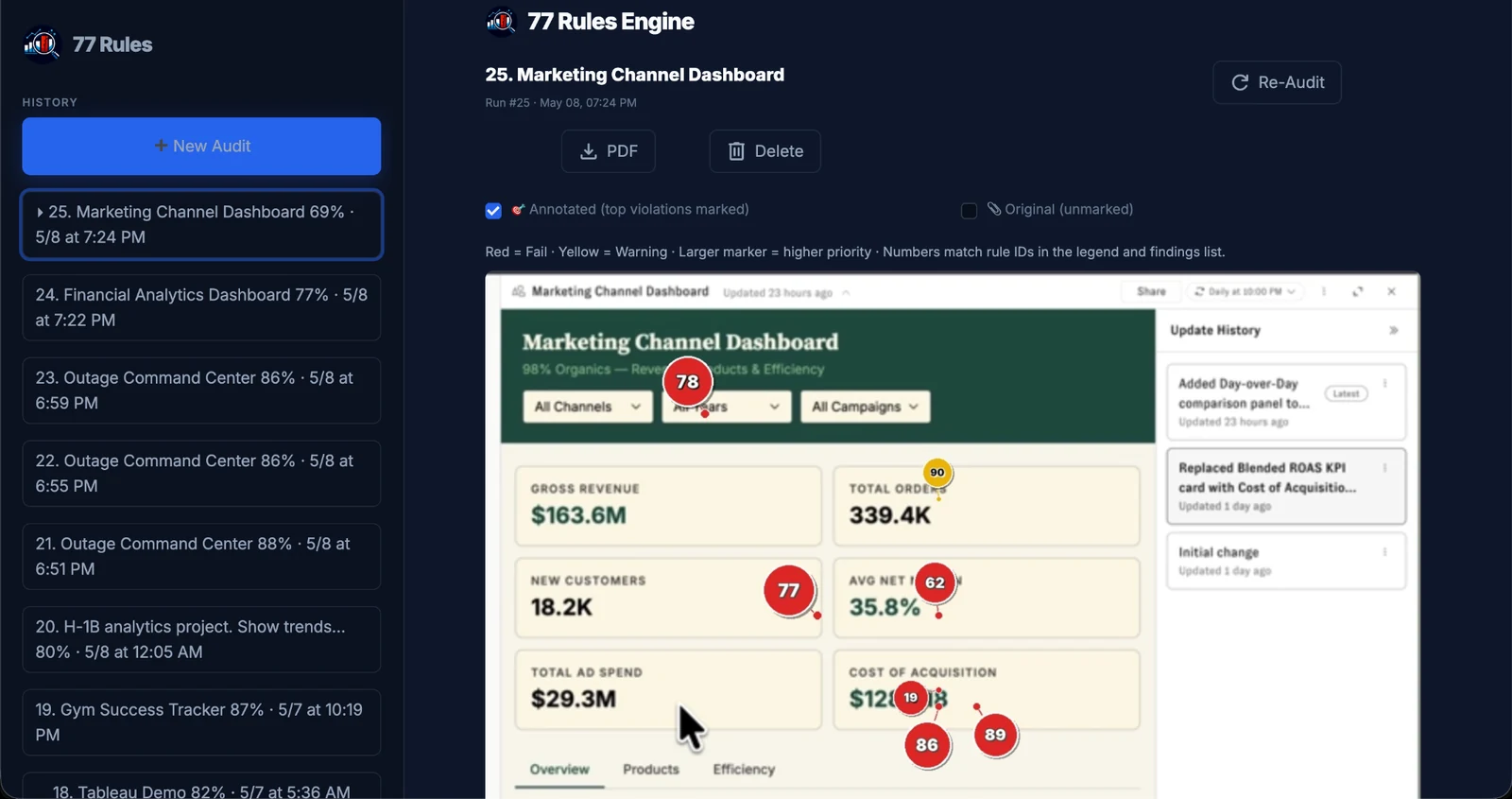
77 Rules production audit workspace showing findings, evidence, scores, and human review controls
77 Rules production case. AI interpretation, structured evidence, explicit domain logic, fixed scoring, and human review are separated so the final decision can be inspected and challenged.

What this changes in an engagement

The value is not a list of employers. It is how the problem gets examined.

Cross-functional experience changes what gets noticed early, what gets challenged, and which risks are treated as first-class production concerns.

01

Model tunnel vision gets challenged.

When the output is wrong, YakData also examines context, semantics, retrieval, workflow, system boundaries, acceptance logic, and human control.

02

Architecture is tied to operating reality.

Security, latency, cost, integration, maintainability, review burden, and failure recovery are treated as design inputs, not cleanup work after the demo.

03

Executive and technical reasoning stay connected.

The business consequence, system evidence, engineering tradeoff, and release decision are kept in one chain so the recommendation can survive scrutiny.

Trusted to teach experienced professionals

Professional associations put Stephen on faculty. Major universities invited him to lecture.

Teaching is useful evidence here because advisory depends on making difficult reasoning legible to executives, engineers, analysts, and operators who have to own the decision afterward.

Professional faculty

INFORMS
American Marketing Association
TDWI

INFORMS · American Marketing Association · TDWI

Invited university lecturer

Princeton University
Brown University
University of Chicago
University of Washington
North Carolina State University

Princeton University · Brown University · University of Chicago · University of Washington, Seattle · North Carolina State University

Built, simplified, published

A long record of turning complicated analytical systems into usable operating logic.

The books and teaching work are not the advisory offer. They are evidence of a repeated ability to find the governing structure inside complex technical work and communicate it clearly.

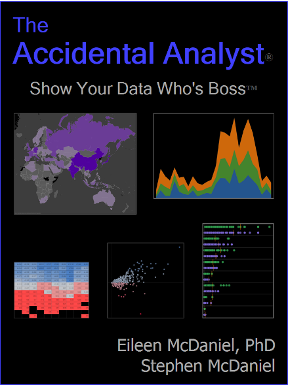
The Accidental Analyst book cover
The Accidental AnalystA practical system for turning ambiguous business questions and messy data into decisions.
SAS For Dummies book cover
SAS For DummiesTranslating a powerful analytical platform into a form a broader professional audience could understand and use.

Stephen looks at what the business needs and works back to the technology. This insight is invaluable for improving ROI and driving quick wins from the analytical investment.

John LodmellCFO, Nordstrom Credit Services

The reason to hire YakData

Your team does not need another generic AI opinion.

It needs a defensible answer to a consequential system question, grounded in production evidence, tradeoffs, economics, and explicit ownership.