
Does the evaluation measure the failures that matter, not just an average score?
FDE Project Files · Episode 05
Make the AI Earn the Right to Be Trusted
Evaluate the actual task, isolate dangerous misses and false alarms, test missing context and malformed output, compare configurations, and define where human judgment changes system behavior.
Coming weekly after Episode 1. Target runtime: 50 to 60 minutes.
Questions this episode answers
Test the failures that could make the system untrustworthy.
These are the questions the episode keeps returning to across product, engineering, evaluation, and ownership.
What happens when evidence is missing, output is malformed, or the model is confidently wrong?
Is human correction visible, auditable, and able to change the final result?
What you’ll see
What Episode 5 shows.
The walkthrough stays anchored to real artifacts and the decision each one supports.
Reference cases with expected findings, evidence, and score behavior.
A current, manual, or other reference point so “better than another model” is not the only comparison.
Quality, reliability, latency, and cost considered as one systems decision.
Separate tests for unnecessary alarms and missed material cases.
Cases where the correct behavior is abstention, validation failure, or controlled recovery.
Reviewer correction with evidence and an audit trail.
Concrete 77 Rules evidence
A strong average can still hide the failure that makes a system unsafe to use.
The public 77 Rules case separates design quality from integrity. One example scored 87% on design but 66% on integrity, which is exactly why evaluation has to isolate consequential misses instead of relying on a single overall impression.
Review the 77 Rules case boundary and evidence →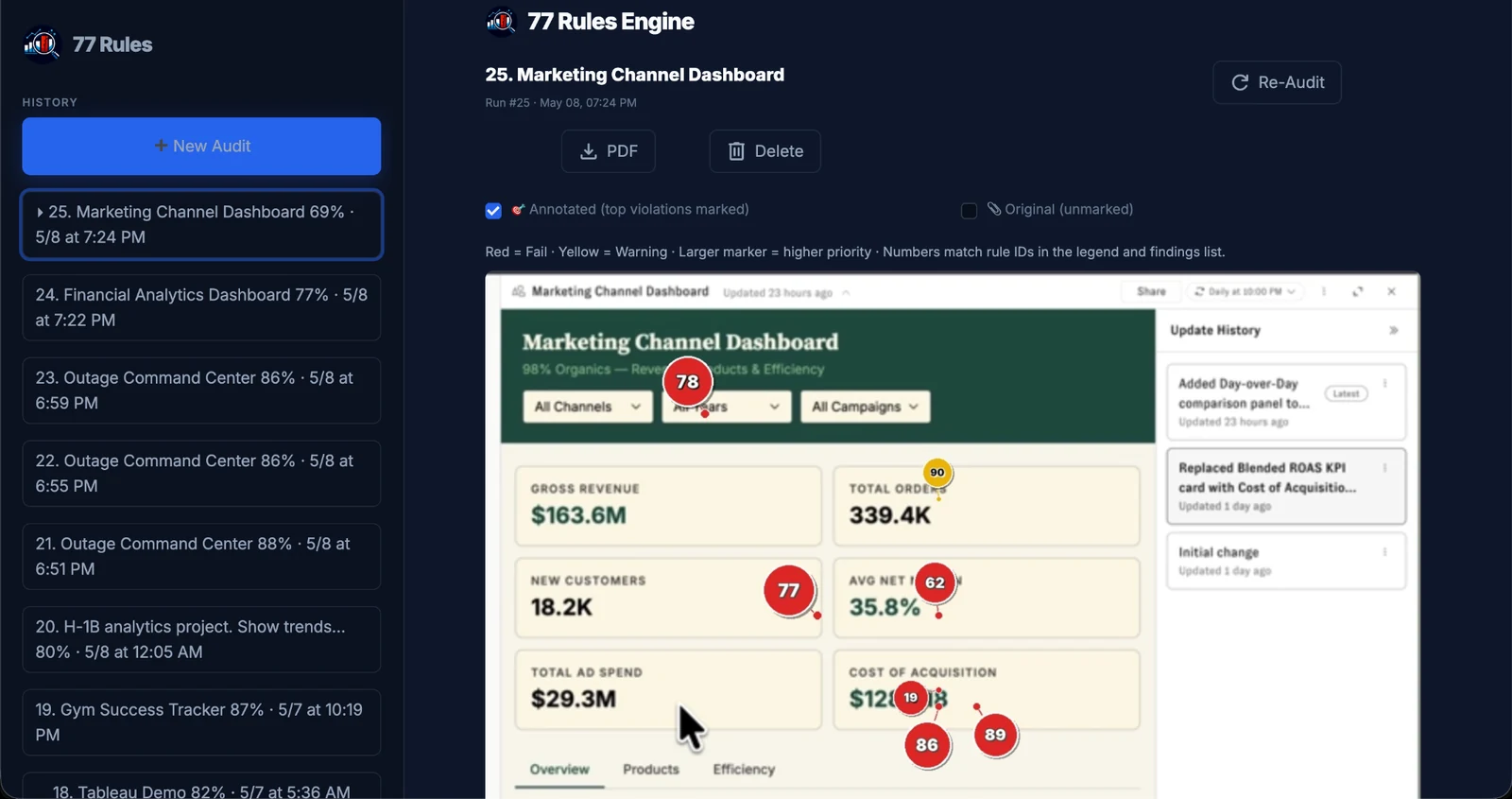
Start here
Use the same production map with your own system.
The free Starter Pack gives you the shared production map, role structure, definition-of-done framework, and core checklists used across the series.